Why Your Brain Won't Switch Off

You're exhausted.
You've been awake since 3 am.
And your brain is busy replaying a conversation from four years ago, planning tomorrow, and catastrophising about something that probably won't happen.
Sound familiar?
You're not broken. Your brain is actually doing exactly what it was designed to do.
The problem is it was never designed for modern life.
Why Your Brain Won't Switch Off
Deep inside your brain is a threat detection system. Its job is to scan your environment for danger and keep you safe.
For most of human history, that meant watching out for physical threats.
But your brain can't always tell the difference between a genuine threat and a difficult email. Or a tense conversation. Or just lying in the dark with your thoughts.
So it stays switched on.
It keeps scanning.
Even when you're safe. Even when you're tired. Even when there's absolutely nothing wrong.
This is called a dysregulated nervous system. And it's far more common than most people realise.
Why Just Relaxing Doesn't Work
Here's the thing nobody tells you. You can't think your way calm.
When your threat system is activated, your body responds physically. Your heart rate increases. Your muscles tense. Your breathing changes.
Your body is literally preparing to run or fight — even when there's nothing to run from.
That's why being told to just relax rarely helps. Your body has to come down first. The mind follows.
Telling someone with an overactive nervous system to think positive is a bit like telling someone with a broken leg to walk it off.
Three Things That Actually Help
You don't need to overhaul your entire life. Small, consistent steps make a real difference.
Box breathing. Breathe in for four counts, hold for four, out for four, hold for four. This directly activates the part of your nervous system responsible for rest and recovery. It takes two minutes and it works.
Body scan. Lie down and slowly move your attention from your feet to the top of your head, noticing any tension without trying to fix it. This pulls your attention away from the thoughts and back into your body — which is exactly where your nervous system needs it to be.
Behavioural activation. Do one small, manageable thing. Make a cup of tea. Step outside for five minutes. Fold some laundry. Movement and gentle action signal to your brain that the threat has passed.
None of these are magic. But done regularly, they start to teach your nervous system that it is safe to switch off.
A Small Step You Can Take Today
If you want a simple daily structure to help your brain find its off switch, the 10 Minute Focus Workbook is a free resource you can download from the link below. It takes less than ten minutes and gives your nervous system something gentle and grounding to come back to each day.
And if you want to go deeper into understanding why your brain works the way it does, our workbook Why Can't I Focus? walks you through the whole picture in a way that's practical, honest, and actually useful.
Both are in the link in our bio.
With So Much Bad News Around, Here Are 3 Positive Stories From Around The World
Because the world is full of quiet progress — it just rarely makes the front page.
Scientists in Japan have created powerful new vitamin K compounds that may help the brain regenerate lost neurons — something previously thought impossible. Researchers describe it as a potential breakthrough for conditions affecting brain health.

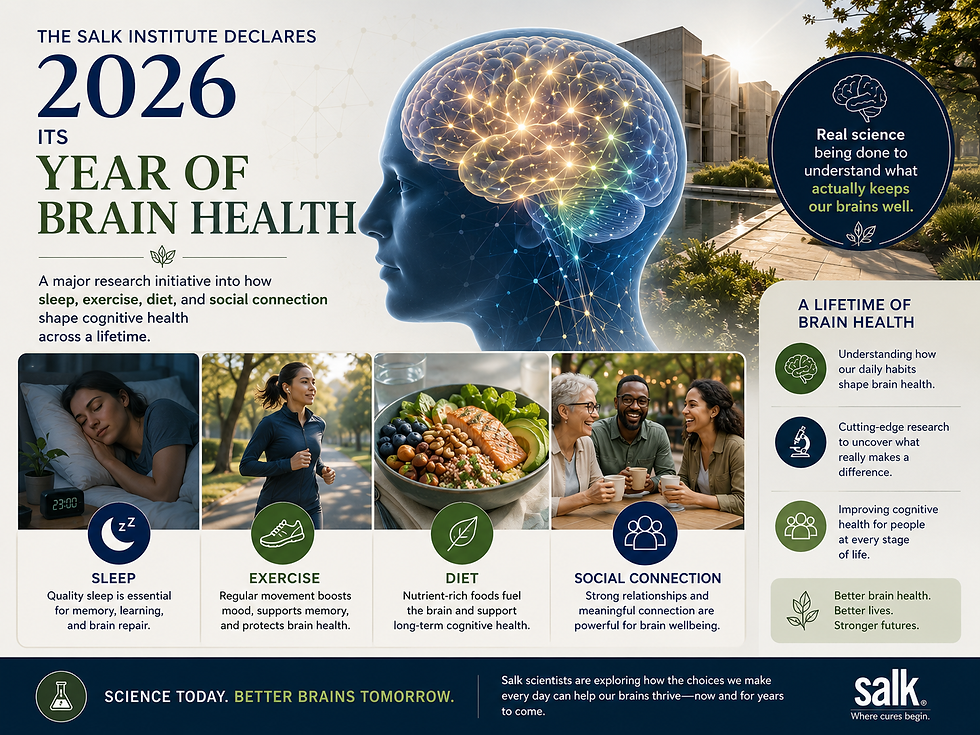
The Salk Institute has declared 2026 its Year of Brain Health, launching a major research initiative into how sleep, exercise, diet, and social connection shape cognitive health across a lifetime. Real science being done to understand what actually keeps our brains well.
And across Europe, rewilding projects are showing that nature recovers faster than anyone expected when pressure is removed. Wetlands restored. Wildlife returning. Ecosystems repairing themselves. Evidence that recovery is possible — in nature and in us.

The world is heavy right now. But it is also full of people quietly fixing things.
See you next Sunday.
Dave and Anna


Comments